Our Founder's Story
The Scene that Continues to Spark the Story
There’s a moment Katherine, known as “Cookee” to friends and colleagues, comes back to whenever the challenges of growing Connective Paths Foundation (CPF) take their toll: listening to women in partner communities speak, steady and sure, about how much more confident and empowered they feel now because of the SiSTER Programme, a livelihoods and women's rights project co-implemented by CPF and its partner grassroots women's organisation, Solidarity of Oppressed Filipino People (SOFP). She remembers filming for the CPF video in one of the communities, watching stories unfold in real time. It reminded her that, “whatever challenges I face in trying to get the foundation off the ground… are so tiny compared to what all these women overcome on a daily basis.”
That contrast between the everyday courage of communities and the often-complicated systems meant to support them sits at the heart of Cookee’s “why.” This is the reason CPF exists: to practice development differently, with trust, shared decision-making, and long-term partnership rooted in grassroots leadership.
The Dream Before the Name
Cookee’s story starts long before CPF had a logo, a strategy plan, or a formal structure. It goes back to a teenager with a fierce, almost incorrigible hope.
“I always had grit,” she recalls fondly. At sixteen, she was “naively declaring… that I would erase poverty if I were the president of the Philippines.”
Years later, she’d look back and recognize how that youthful fire matured. A friend once teased her with a cartoon image: Cookee driving a tiny car with a giant eraser, trying to erase poverty. She laughs at it now, because the “giant eraser” mindset is long gone. Today, her focus is her seemingly smaller but just as ambitious sphere of influence: showing up every day, doing the important work, and reforming what she sees as unjust practices in development aid.
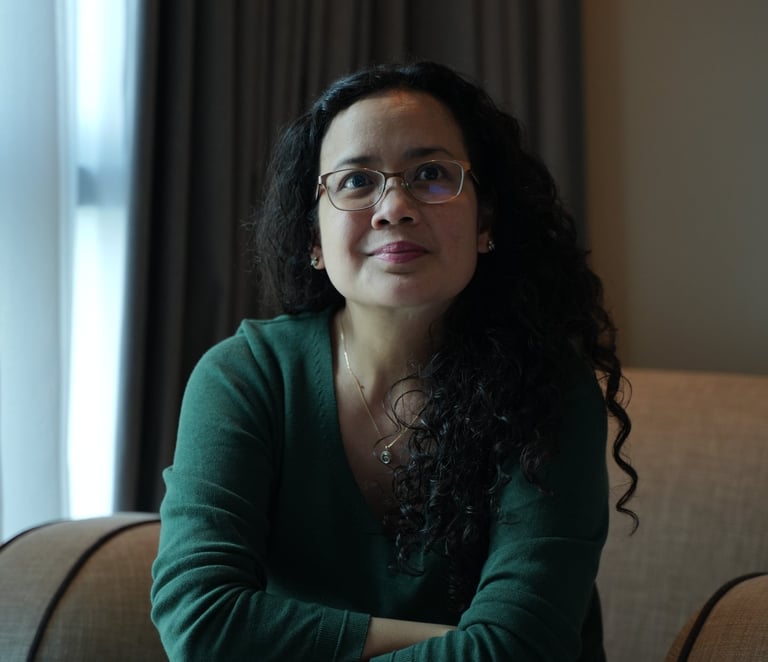
Katherine Marie Belen (Cookee), CPF Founder and Executive Director (Photo credit: Connective Paths Foundation)
The Years that Shaped Herstory
Cookee entered the development sector early, choosing purpose over comfort. “In 2002, I left a thriving business to join a women’s rights NGO as a project assistant… But it paid off as I knew I had found my calling.”
Those early years gave her what no textbook could: the lived texture of what it takes to organize, to train youth and women to advocate for their rights, and to sustain community work even when funding trends shift.
After 6 years training Filipino women and youth to advocate for their rights, she had to draw upon her grit again when her NGO ran out of funding and closed, alongside hundreds of others. Women’s rights NGOs were closing in the Philippines in the early 2000s, due to donors’ priorities shifting away from “middle-income countries”. Also, after 911, more money was poured into anti-terrorism and climate change, for example, and funding for reproductive health and gender severely diminished. On top of the donor shift, she also recalls that, “Our NGO lost funding also due to an injurious practice of our international NGO funder, which eventually chose to directly fund the youth groups that we mobilised in phase 1 of the project, effectively cutting us out of Phase 2”. It revealed how easily local organisations are sidelined when power and resources sit elsewhere.
Over time, she moved through different roles in the sector, working in international NGOs serving marginalized and grassroots communities. This vantage point sharpened her understanding of what equity and justice must mean in practice, not just in principle.
But it also made some frustrations impossible to ignore: How often local leadership is praised in theory but constrained in practice; how often “partnership” still defaults to unequal control; and how easily the people closest to the work become the farthest from decisions.
Fulfilling Her 16-year-old Dream
Cookee describes a turning point that felt like a convergence: part research, part lived experience, part uncomfortable clarity.
While doing her doctoral research, she encountered “An open letter to International NGOs who are looking to ‘localise’ their operations.” The letter gave language to something she had witnessed again and again: that “localisation” can become a hollow promise when it looks more like expansion rather than transfer of trust, especially when big institutions enter local spaces in ways that compete with local civil society rather than strengthening it.
What stayed with Cookee wasn’t only the critique, but the invitation behind it: if we are serious about localisation, then power must move. Local leaders must be trusted not just with implementation, but with decisions, resources, and visibility. And local organizations should be supported to lead, rather than treated as stepping-stones or subcontractors.
Sitting with that message, Cookee also sat with her own honest reckoning. “I have been complicit in maintaining the power imbalance in the aid sector for decades,” she wrote, reflecting on how she had benefited from the “languages of the powerful” as a UN consultant for over a decade. She always recognized her position of privilege—having post-graduates from Global North-based universities and working internationally even if she was from the Global South. However, her growing exposure to the decolonize aid discourse in 2021, fueled growing unease, on top of the disillusionment.
But these feelings of discomfort and frustration also lead us to our moments of realization. After this realization, the next question is: If those of us who’ve witnessed it don’t act, then who will? For Cookee, that question became a line in the sand. Analysis had to become action, and critique had to become commitment.
That’s where the idea of CPF stopped being just an aspiration and started becoming not only a fulfillment of the dreams of her 16-year-old self, but a responsibility she was now willing to breathe life into, to come alive as a concrete vehicle for change.

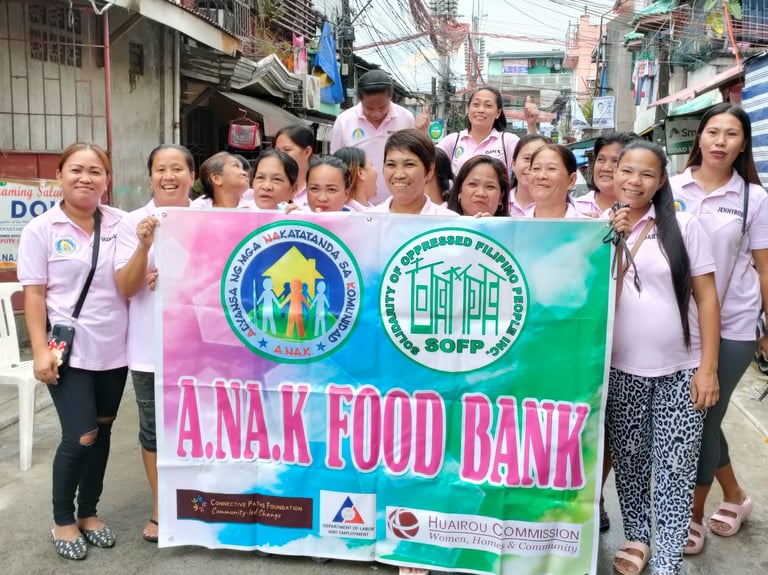
CPF and SOFP video: Women share how their families have increased their savings and incomes—allowing them to get out of debt, cover household expenses, and provide for their children's needs.
The pilot 6 organisations has since grown to 34 by the end of 2024, and 78 by the end of 2025.(Video credit: Connective Paths Foundation, 2024)
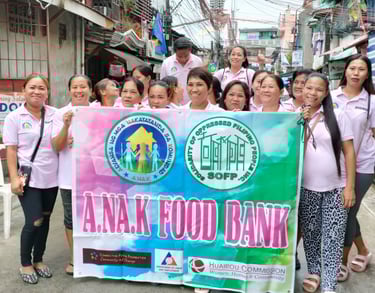
CPF and SOFP launched the SiSTER Programme in early 2022 to form micro-enterprises led by women from informal settlements—scaling up the successful savings group and food bank model of ANAK. (Photo credit: SOFP)
Building Connective Paths
Cookee founded CPF in 2021, after more than two decades of working in rights advocacy, strengthening grassroots coalitions and evidence-based programming. Registered in the Netherlands, CPF exists to support community-led solutions through participatory grantmaking, wherein decision-making is shared with partners working closest to the communities.
CPF’s approach is intentionally trust-based and long-term: multi-year support, stronger organizational capacity, and partnership designed with co-design, co-implementation, and co-evaluation at the center. But what makes CPF distinctive isn’t only what it funds, but how it learns, and who leads the learning.
Too often, organizations that want to support grassroots women’s groups design programs from the outside without fully understanding how local government mechanisms work, how community dynamics shape decisions, or why “good on paper” solutions, can stall in practice.
CPF’s partnerships with grassroots organizations show what becomes possible when power truly shifts, and CPF’s partnership with SOFP is its biggest achievement to date. It has been a genuine allyship built around shared decision-making, mutual respect, and the belief that the strongest strategies are the ones shaped by both global evidence and grassroots experience. Cookee points to this as one of CPF’s clearest signs of progress, and how the head of SOFP always proudly shares that, “We are not being treated as projects, we feel we are really partners.” Their trust-based partnership has also created space for continued innovation and growth.
CPF, through its intentional and genuine programming, is proof that when communities lead and are supported with trust and the right technical partnership, the work gets stronger, the outcomes go deeper, and the change lasts longer.
CPF’s Next Chapter and Invitation
CPF’s next chapter is about deepening and widening: more engagement beyond the “usual” development audiences, and stronger pathways for communities and everyday people to participate, especially locally.
It also includes a major focus on sustainability—both of its partners and its own organization. It includes supporting partners to strengthen self-sustaining funding models as well as growing social enterprise models. These aim to build resilience beyond project cycles so community-led organizations can keep leading without being perpetually dependent on external support.
Cookee’s invitation to readers is simple: support change that shifts power in practice. Share CPF’s work and the hopeful story of success that when trust and respect for community leadership and expertise prevail, the solutions to development problems are greatly owned, effective and sustained. Contribute if you can. Else, champion practices that strengthen local institutions and invest in more relevant and sustainable programs that are not externally driven. Spread the word about our work. There are many ways to contribute.
Because for Cookee, CPF was never just a professional milestone. It’s the long-awaited decision to build what she once only dreamed of, and to build power with communities, not over them.
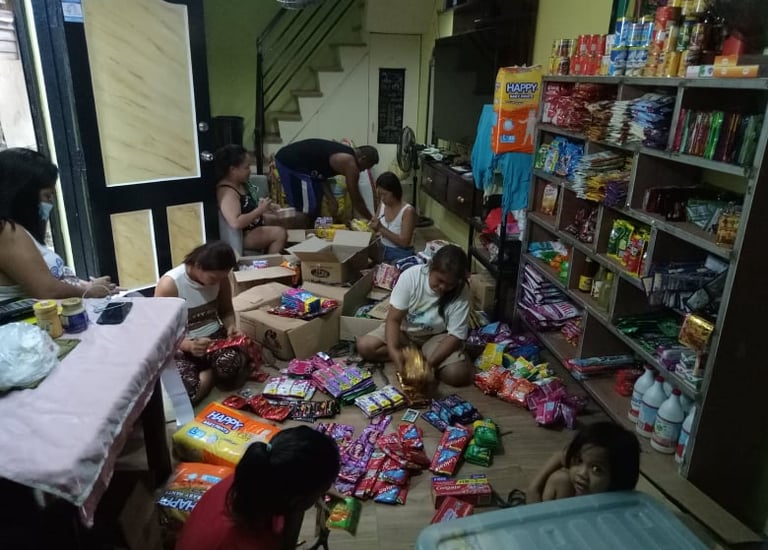
The women raise the capital for their micro-enterprises through their own pooled savings, and funds they raise locally. (Photo credit: SOFP)
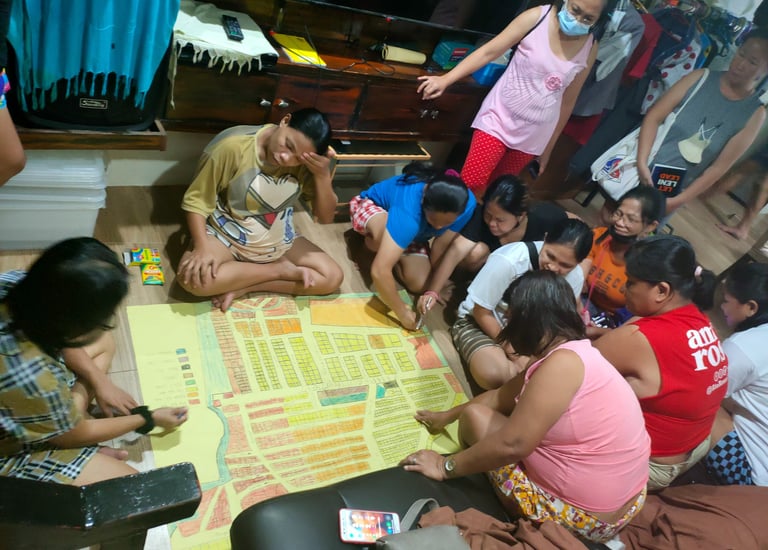
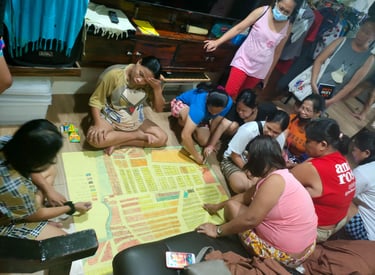
Community women doing safety audits and asset mapping as part of business planning. (Photo credits: SOFP)
CPF is now raising funds to support over 100 women's groups with business skills training.
Connective Paths Foundation (CPF)
Keizersgracht 391 A, Amsterdam, 1016 EJ, Netherlands
Follow us on
KVK: 85260509
RSIN: 863565165
VAT: NL863565165B01
Site Map
Better development is possible. We support:
women to earn
communities to lead, and
organisations to work differently.
Support community-led development, donate via credit card (VISA, Masterdard, American Express), iDeal or banktransfer.
Note on photos: Some images are for illustrative purposes only.